
What would you do with five extra hours this week?
not to work... like what would you WANT to do with that time?

What would you do with five extra hours this week?
Not five hours of more grading.
Not five hours of committee meetings you got voluntold into.
Five hours of YOUR time. Reading. Walking the dog. Sitting at Starbucks doing nothing. Watching something terrible on Netflix without guilt.
That’s the question this week. And both of our guests answered it - not with theory, but with boundaries they actually keep.
YouTube · Apple Podcasts · Spotify
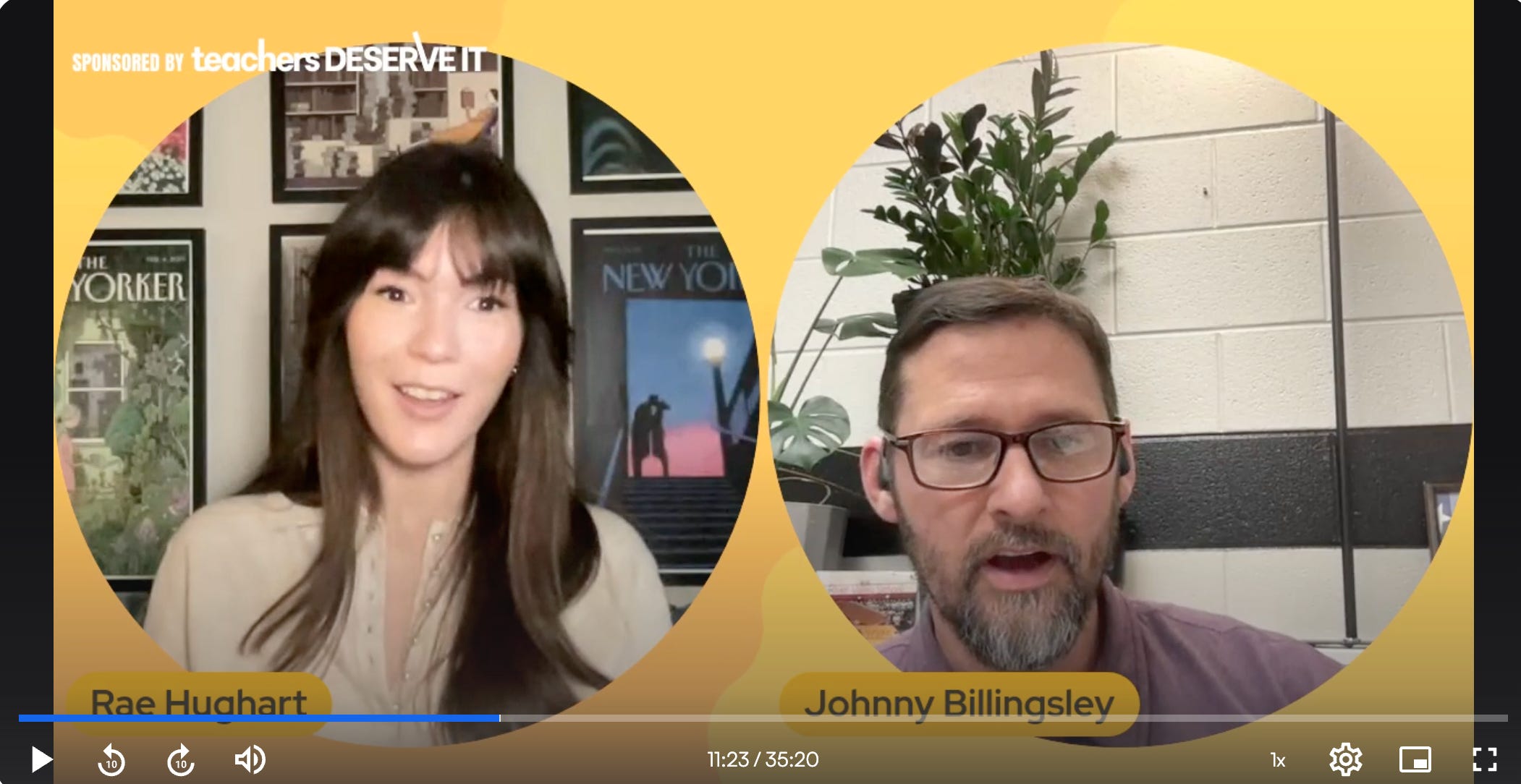
Episode - with Johnny Billingsley
Johnny has been in education for 28 years. He was a middle school principal for 14 of them and then did something most people don’t talk about. He stepped back. Voluntarily moved from principal to assistant principal so he could pursue his superintendent endorsement without burning out in the process. He calls it a step back. We’d call it a sustainability strategy.
YouTube · Apple Podcasts · Spotify
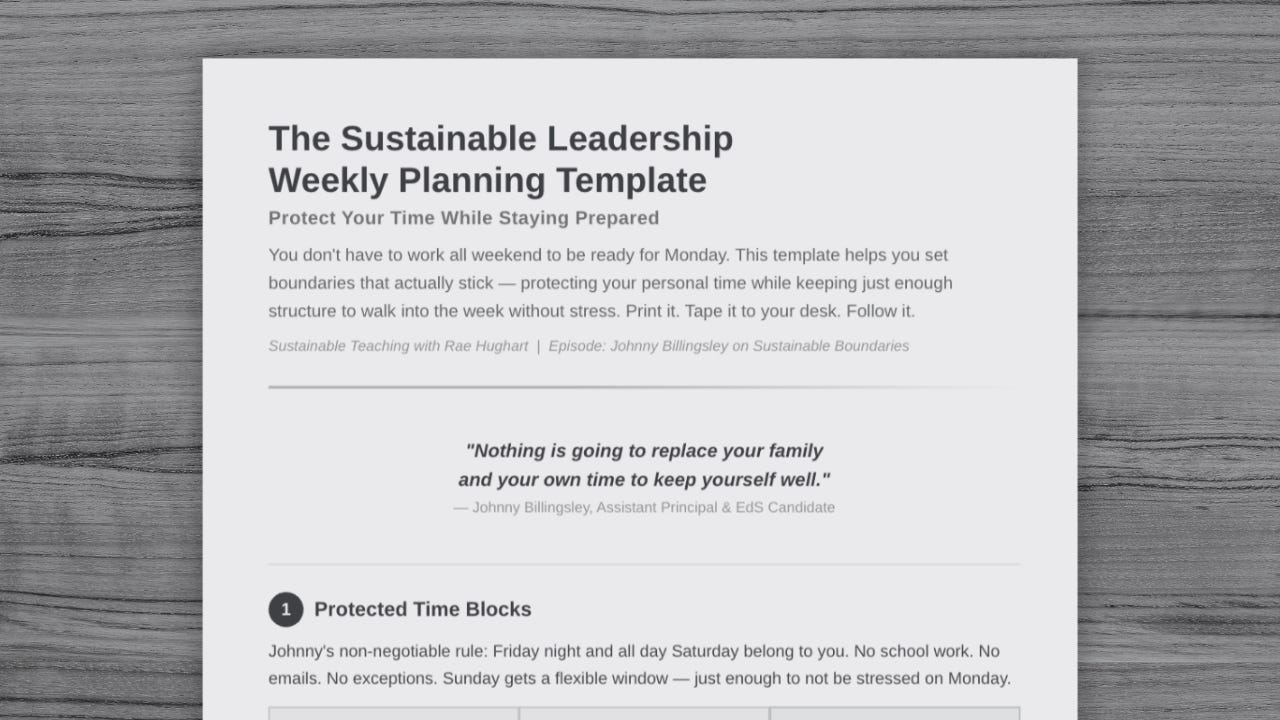
The Episode Resource
[Download] → The Sustainable Leadership Weekly Planning Template
A one-page planning tool to protect your time while staying prepared. Includes protected time blocks, a Sunday prep window structure, a daily completion strategy, and communication boundary rules. Based on Johnny’s system of keeping Friday night and Saturday completely free — no exceptions.
This resource is also in The Vault for paid subscribers, along with 50+ other tools.
The Takeaways
Here’s what stuck with us.
First, Johnny’s Friday-Saturday rule. Friday night and all day Saturday are non-negotiable. No school work. No emails. No exceptions. Sunday gets a flexible two-hour window - roughly 5 to 7pm - to check emails, review sub schedules, and prep for Monday. That’s it. Two hours. And then he’s done. He’s not working all weekend. He’s doing just enough to not be stressed on Monday morning.
Second, the schedule-send strategy. Johnny used to be the principal sending emails at 9:30 at night. He stopped. Now if something’s on his mind, he writes it and schedule-sends it for the next morning. Same with texts - you can schedule-send those now too. It’s such a small tweak but it protects his teachers’ personal time, which is exactly what he’d want someone to do for him.
Third, he made the case that stepping back can be the most sustainable move you make. Going from principal to AP gave him less stress, more learning, and the space to pursue his EdS. He didn’t see it as a demotion. He saw it as a fit. And that reframe - finding the right fit instead of chasing the next title - is something more educators need to hear.
Resources Mentioned
→ Johnny on X/Twitter: @JohnnyBSchool
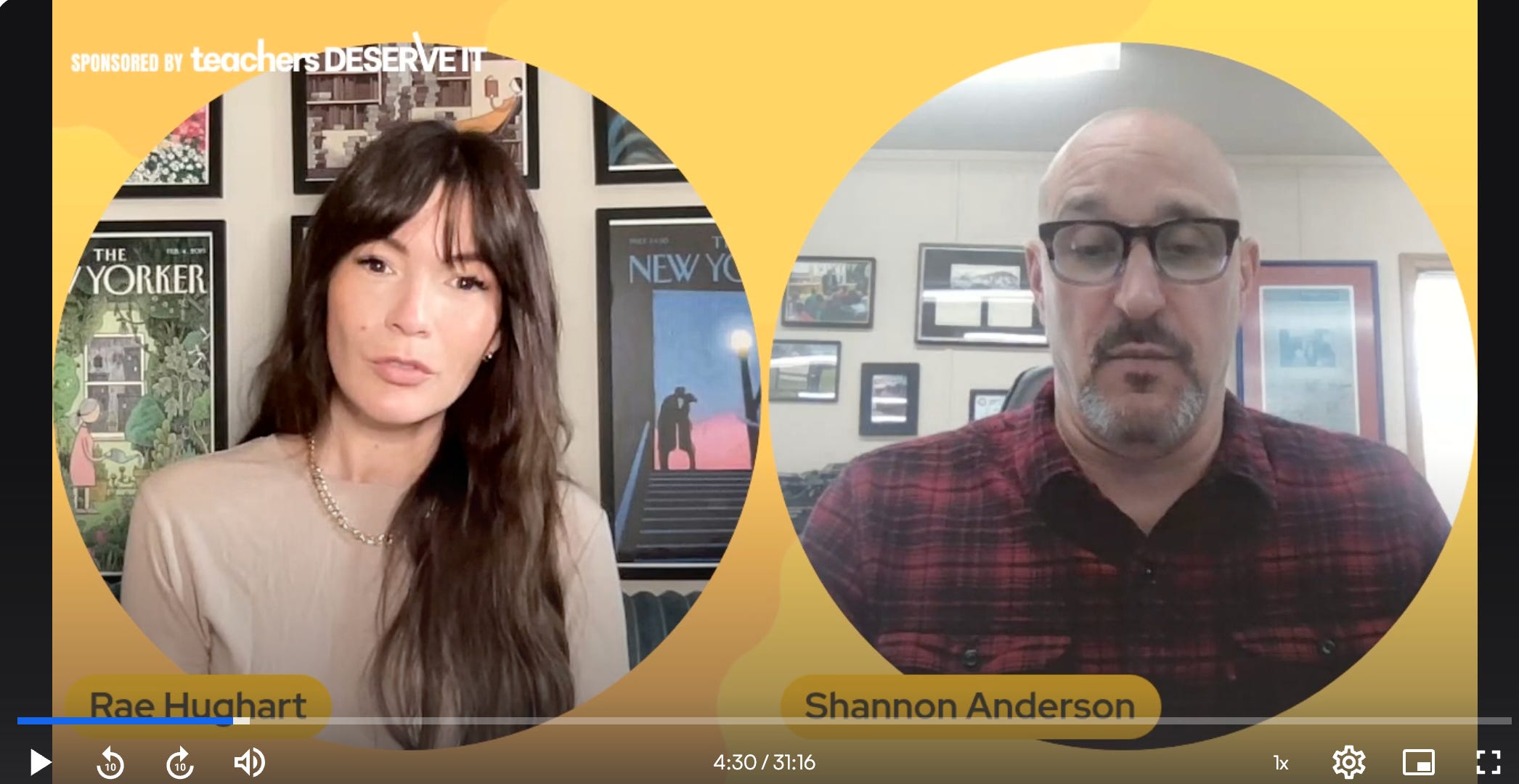
Episode - with Shannon Anderson
Shannon is the superintendent of Momence School District in rural Illinois — about an hour south of Chicago, population 3,200. He’s a Marine veteran, 30 years in education, and in his ninth year as superintendent. His philosophy? Remove friction for teachers so they can do what they actually went to school to do.
YouTube · Apple Podcasts · Spotify
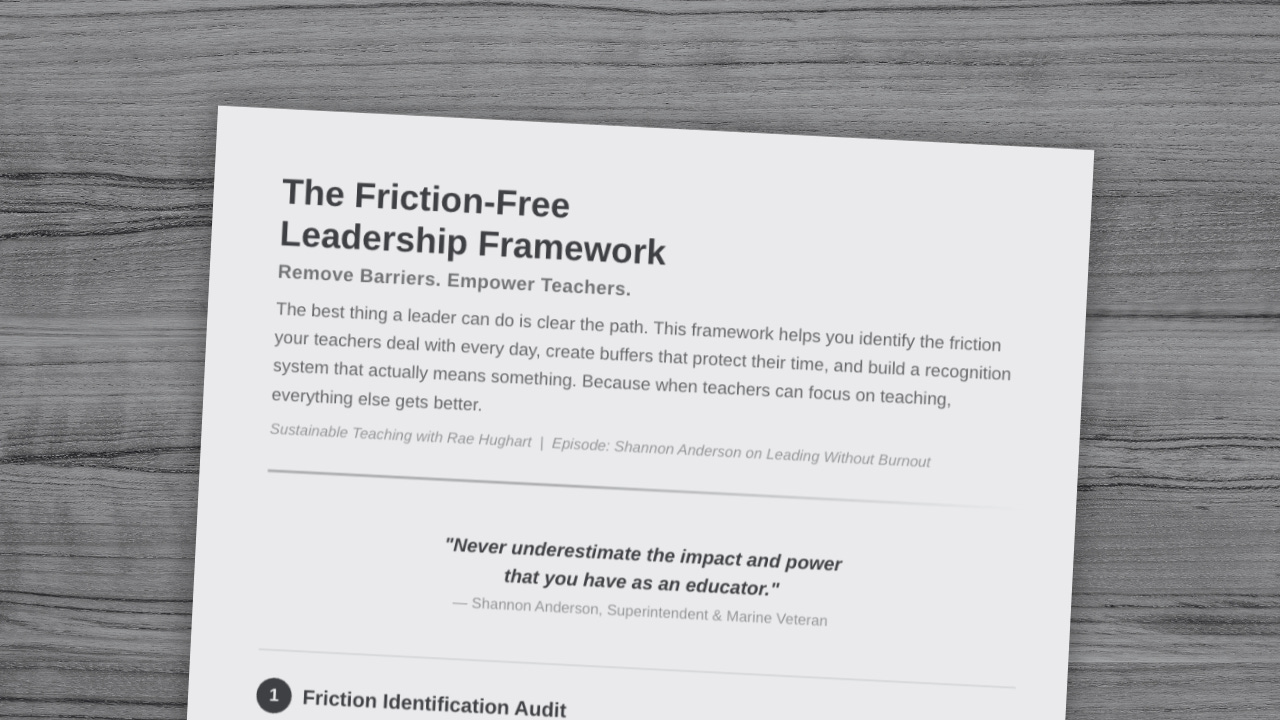
The Episode Resource
[Download] → The Friction-Free Leadership Framework
A template for identifying and removing barriers that get in the way of teachers doing their best work. Includes a friction identification audit, buffer creation strategies, a smart recognition framework, and a weekly leadership action checklist. Because the best thing a leader can do is clear the path.
This resource is also in The Vault for paid subscribers, along with 50+ other tools.
The Takeaways
Here’s what stuck with us.
First, Shannon’s approach to recognition. Not the generic “good job” in the hallway. He’s talking about specific, timely, smart recognition. When his junior high showed growth on MAP testing, he didn’t wait for a meeting. He sent an email naming exactly what he saw and why he was proud. That takes three minutes. The impact lasts all semester.
Second, he extends that same energy outside the building. When village employees came to fix a water issue at the school, he asked for their names. He’s writing them each a handwritten letter today. In a town of 3,200, those gestures build the kind of trust that makes everything else easier. It costs nothing but attention.
Third, his advice for the teacher afraid to teach history right now: stay neutral, present both sides, and know that the stuff above your head — parent complaints, TikTok recordings, slide review requests — that’s your admin’s job to handle, not yours. Stay true to your content. Stay objective. And trust that your leadership should be ready to support you through it.
Resources Mentioned
→ Shannon’s email: s.anderson@cusd1.net
→ Phone: 815-472-3501 / 815-918-5020
TELL US!
What would YOU do with five extra hours this week?
Drop it in the comments. We want to hear what you’d reclaim.
Protect your time. Clear the path.
The work is better when you’re not running on empty.
Rae